Web Page: Creating and Running a Club in High School
Web Page: How to Write Your Mission Statement

Do they achieve your goals for the club? What activities worked well? What could be improved? What other activities might people enjoy?
Remove activities or parts that are uninteresting or off topic.
Add new activities that members will enjoy.
Rework the club charter as necessary.
A club Web site lets people know what the club is about and how to join. Here is a sample Web page.

Mission Statement: The Oak Ridge South Physics Club is a club for high school juniors and seniors interested in learning more about physics.
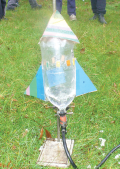
We meet monthly to learn new concepts, discuss ideas, observe field work, and design and test new experiments.
Some topics we’re interested in include:
Physics Club is open to any junior or senior who has completed Physics 1 and maintains at least a 2.5 GPA.
We meet after school on the third Thursday of the month at 3:30 p.m. in Room 104.
President
Camila Ortiz
Faculty Advisor
Mr. Adams (kwadams@nhhseduc8or.edu)
Are you unsure what type of club you would like to create? Here is an overview of some general types.
Social clubs serve as a place for members to meet and discuss whatever is on their minds. You might create a social club to socialize and have fun. Unlike most other clubs, the main focus is the people within a club.
An honors club connects people who excel in similar subject areas. Members are recognized for their achievement, and they work together to further their skills. Honor societies, in particular, celebrate academic achievement and involvement in the classroom.
Other clubs focus on a common interest and attract people who share that interest. Some examples include chess, math, fashion, art, or shop work. Sometimes club members team up to enter state or national competitions related to the club’s focus.
A cause-based club brings together people who share a passion for a particular cause. These clubs launch campaigns to fight bullying, feed the hungry, save the environment, and rally for human rights.
Similarly, service-based clubs, like Key Club, are set up for members to serve the needs of their communities through volunteer work. Members share an interest in community and helping others. They might volunteer at local festivals, visit senior homes, or help out at a thrift store or soup kitchen.
Event-based clubs meet for specific events. A fan club might meet to cheer on their favorite team or watch their favorite TV show. A breakfast club might meet before school every Friday to eat at a local restaurant.
Your Turn Pick three types of clubs from above. Then, for each type, identify a focus of a club you might join or create.
Web Page: Creating and Running a Club in High School
Web Page: How to Write Your Mission Statement